Work from the supply inwards. On an electric heater, check the breaker and the reset button first. On a gas heater, check the pilot or ignition and the gas control setting. If supply is fine, the likely culprits are a failed element or thermostat, heavy sediment, a dip tube problem on older tanks, or a tankless unit limited by scale or flow. Most are repairable in one visit.
First, the free checks
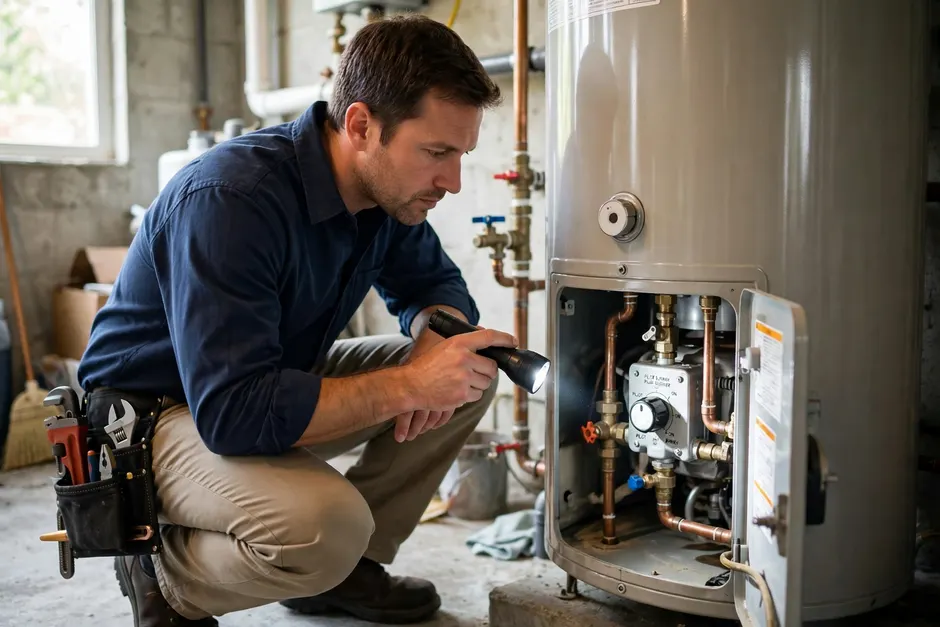
Electric: find the heater's breaker in your panel. A tripped breaker that trips again immediately is information, not bad luck, so do not keep resetting it. Then press the reset button on the upper thermostat behind the heater's access panel only if you are comfortable and the power is off while the panel is open. Gas: look through the sight glass for a pilot or a flashing status light, and confirm the control knob is not sitting at Vacation or Pilot. Many no-hot-water calls end at one of these, and we would rather yours did too.
Also check the obvious that pride hates admitting: did the problem start right after guests, a big laundry day or filling a soaking tub? That is demand exceeding recovery, not a fault, and the fix is sizing or habits rather than parts. Lukewarm everywhere, all the time, points somewhere colder: a thermostat, an element working alone, or cold water crossing into the hot line at a faulty mixing valve or shower cartridge.
Electric heaters: elements and thermostats
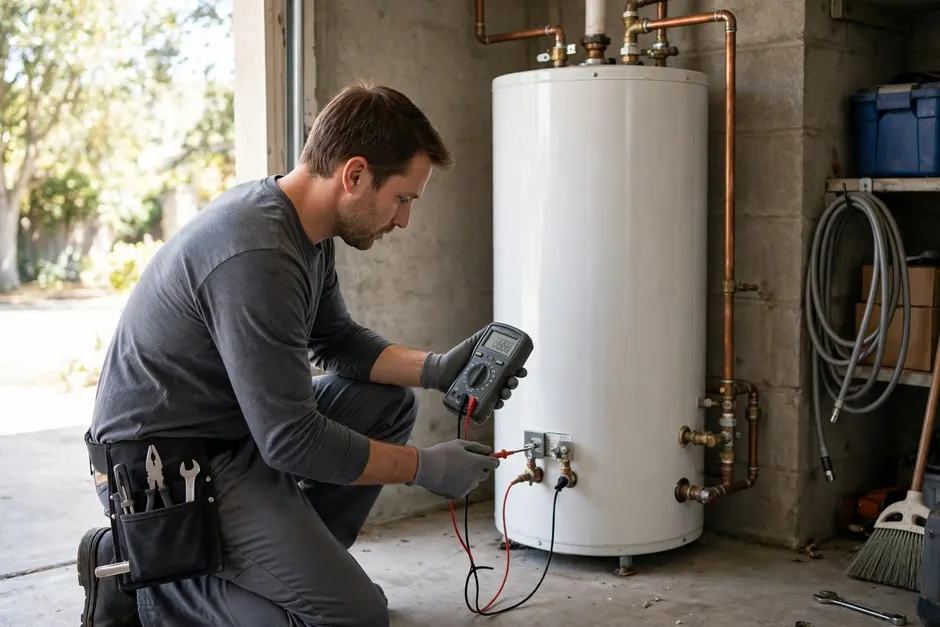
An electric tank heats with two elements that take turns, the upper first. A failed upper element means no hot water at all. A failed lower element means a short supply that starts hot and gives up. Sediment from our limestone water buries lower elements and cooks them, which is why element failure and a rumbling tank so often arrive together in Thompson's Station. A meter test separates element, thermostat and wiring faults in minutes, and all three are service parts on a sound tank.
While you wait for us, you can reduce the mystery: note whether the water is stone cold, warm-ish, or hot-then-cold. That single detail, plus whether the breaker has tripped, usually tells an experienced technician which test to run first. Tell us on the phone and the visit starts halfway done.
Gas heaters and tankless units
Gas faults cluster around ignition and sensing: a thermocouple or flame sensor that no longer proves the flame, an ignitor that has given up, or a gas control at the end of its life. Venting problems can also shut a modern unit down for safety, and that shutdown is the system protecting you, so a unit that keeps locking out needs diagnosis rather than repeated resets. Never ignore a gas smell while troubleshooting: leave, and call from outside.
Tankless units add scale to the story. In mineral-heavy Williamson County water, a heat exchanger narrowing with scale produces the classic complaint: water that starts hot, turns cold mid-shower, or an error code during the morning rush. Descaling is a service procedure, not a repair drama, and units that get it yearly in hard water behave far better than units that wait for the error code.
When no hot water means a new heater
Some findings close the repair road: a tank leaking from its body, heavy corrosion at the fittings, or fault stacking on an old unit where each repair buys less time. In those cases the honest conversation is replacement, sized properly this time, with the options compared in gallons, recovery and fuel. Our repair or replace article walks the decision in full. What we will never do is use a cold shower as pressure. The diagnosis and the prices come first, in writing, and the choice stays yours.
| Symptom | What it points to |
|---|---|
| Stone cold, breaker tripped | Element short or wiring fault; test before resetting again |
| Hot, then cold fast | Lower element failed or heavy sediment |
| Warm but never hot | Thermostat fault or cold water crossing over |
| Tankless swings hot and cold | Scale in the exchanger or flow over demand |