In Detail
Kitchen Plumbing: The Detail That Decides It
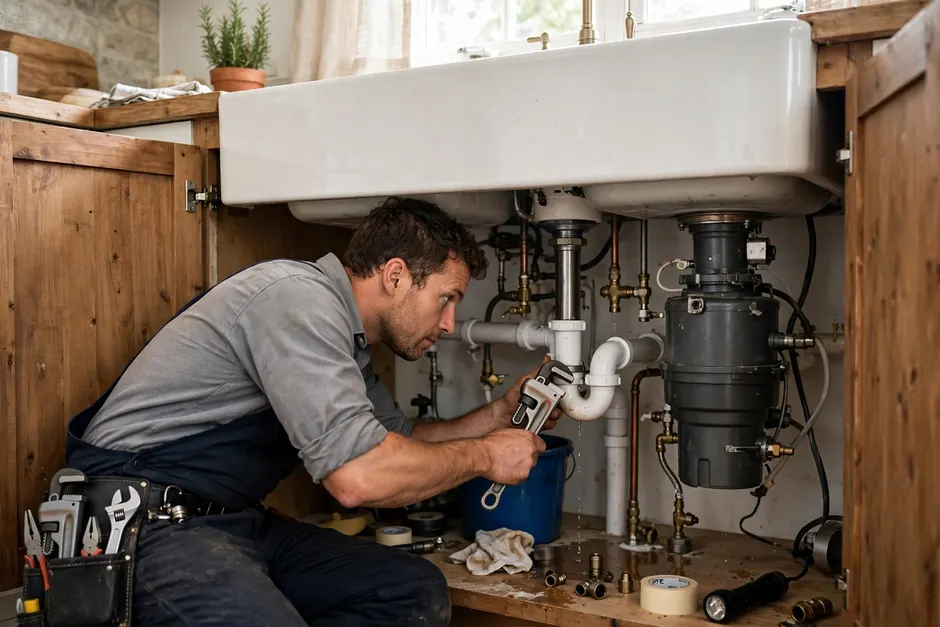
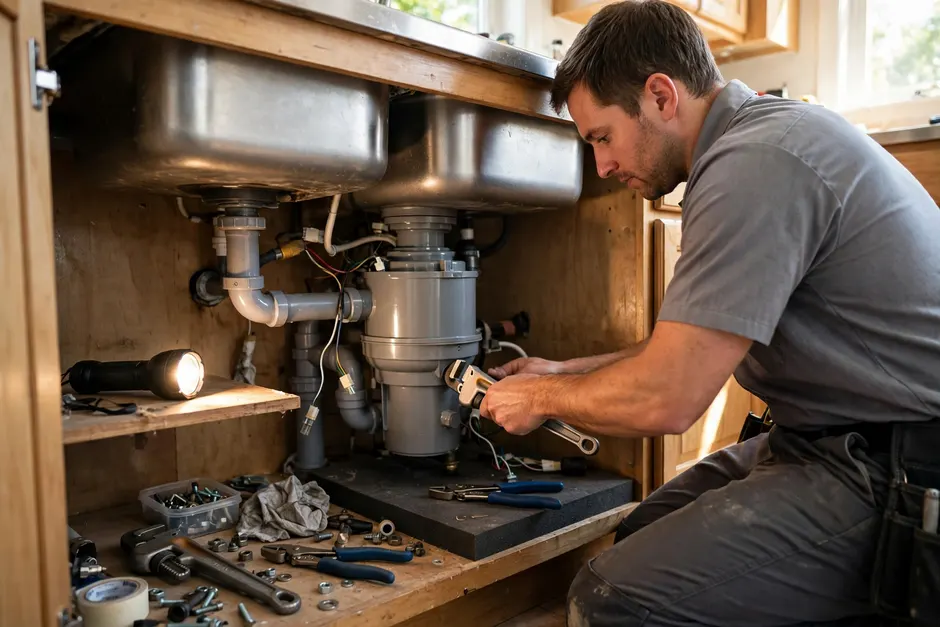
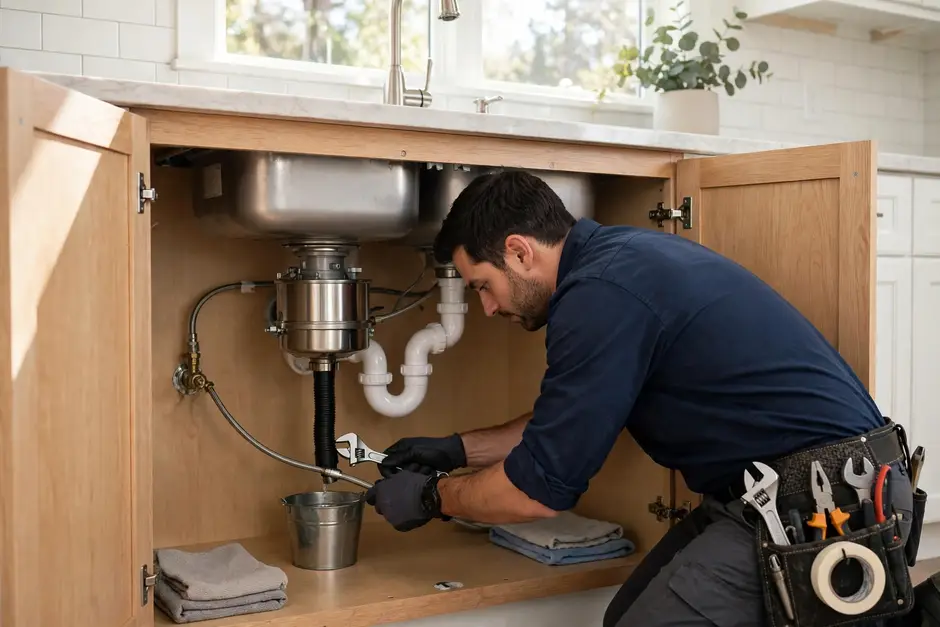
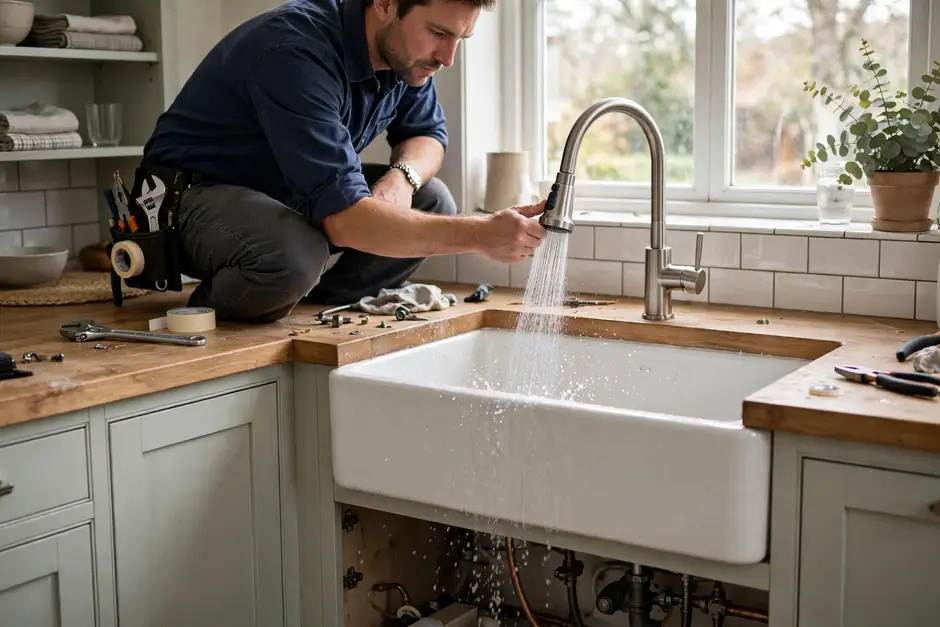
The kitchen sink cabinet is the busiest intersection in domestic plumbing: two supplies, a trap, a disposal, a dishwasher line, sometimes a fridge line and a filter, all sharing a space also used to store cleaning chemicals and a bin. It is no surprise it is our most visited cupboard in Thompson's Station. Our habit there is forensic: dry everything, then run one source at a time and watch. A trap joint that weeps only when a full sink is released, a disposal seal that leaks only while it spins, a dishwasher hose that drips only on the drain cycle: each fault keeps its own schedule, and catching it means running its schedule. The other kitchen discipline is honesty about grease. No product, gadget or enzyme makes a grease habit free. We clear the branch, we set the trap geometry right, and we leave you the can-by-the-cooker advice, because the cheapest kitchen plumbing is the kind that never has to happen. The dishwasher connection deserves its own inspection while we are under there. Its drain hose must rise in a high loop or pass through an air gap before it meets the disposal inlet or the branch, a humble arrangement that stops sink water from ever siphoning back toward the machine and its clean load. We find that loop fallen, kinked or bypassed in a fair share of the kitchens we open, usually after a well-meant appliance swap, and restoring it takes minutes inside a visit that was already happening. Fridge lines earn the same minutes: the little saddle valves and tired plastic tubing left by decades of ice makers are slow leaks in waiting, and a proper stop with braided line is one of the cheapest upgrades in the room. A kitchen, in the end, is a row of small promises made by hoses and valves, and our job is to check each one kept.