In Detail
Hydro Jetting: The Detail That Decides It
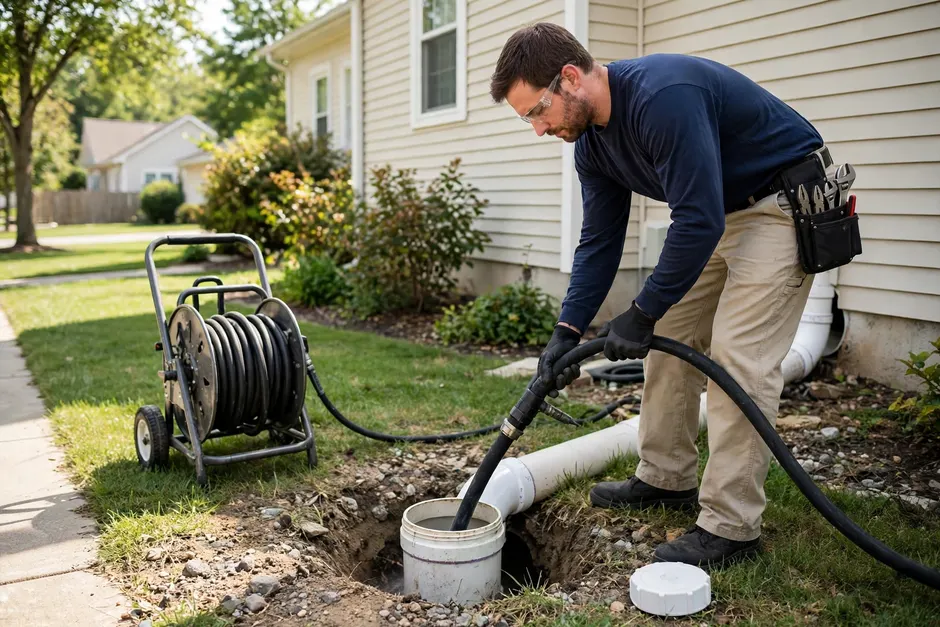
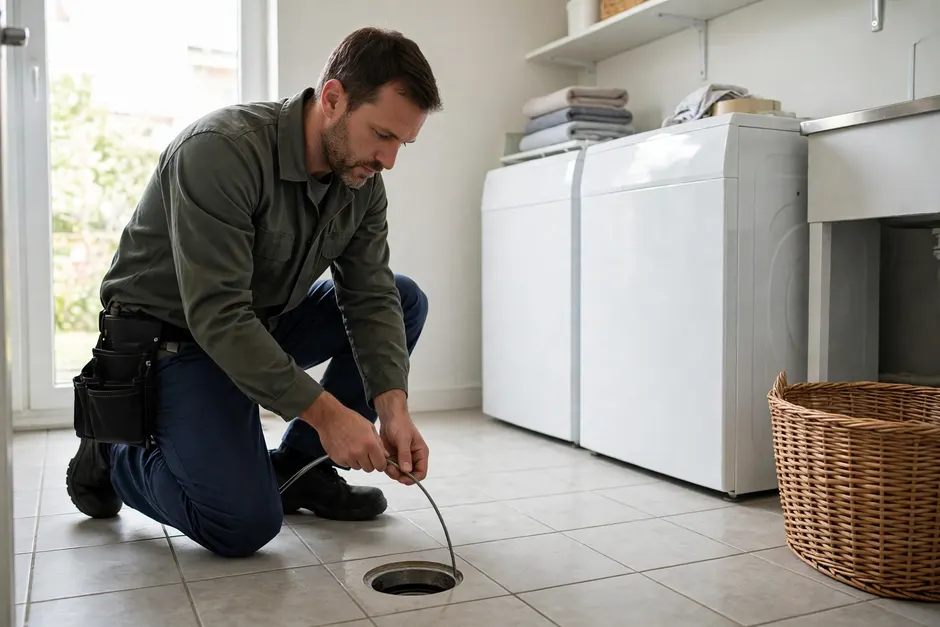
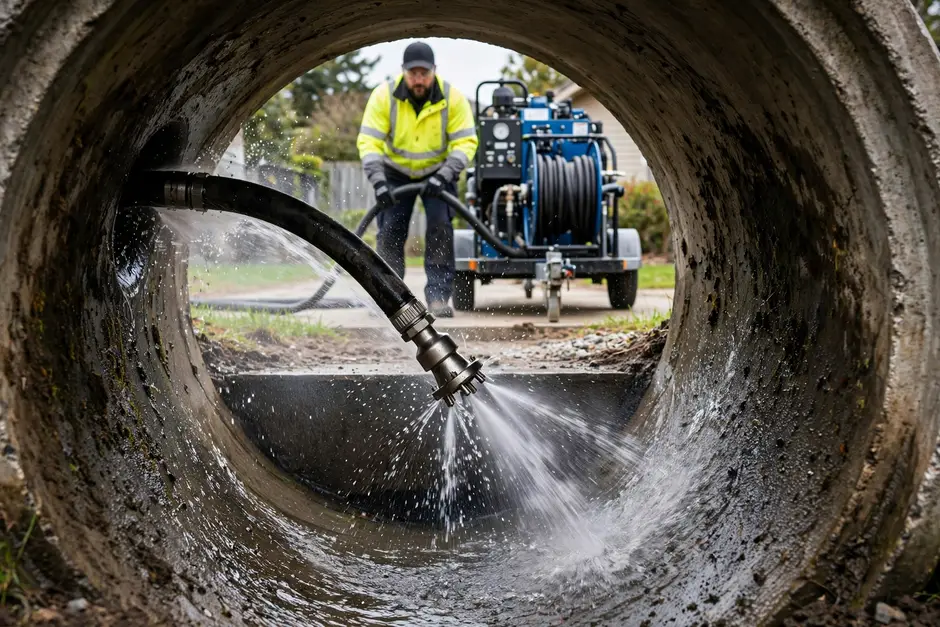
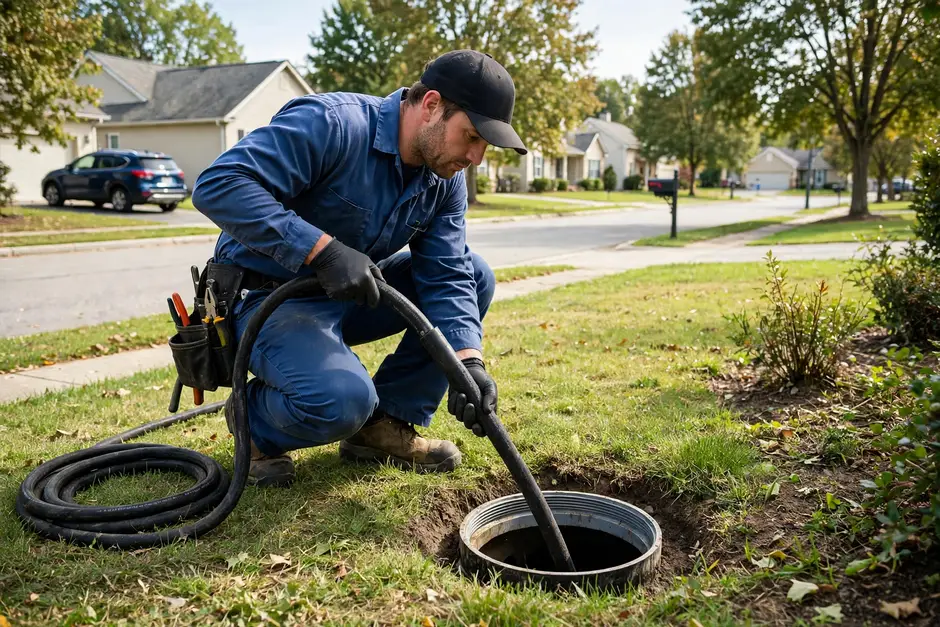
The machinery deserves a plain explanation. A jetter is a pump, a long high-pressure hose and a nozzle with jets angled backward. Those rear jets pull the nozzle along the pipe and blast the wall behind it, while a forward jet, where fitted, breaks up what lies ahead. Residential work runs at pressures chosen for household pipe, and the operator's skill is in the pacing: dwell where the camera showed grease, keep moving where the wall is clean, and never park a live jet against a fitting. Grease leaves as a slurry, sand leaves as grit in the flow, and fine roots leave as pale ribbons at the cleanout, which is oddly satisfying to watch. Owners often stand with us for the camera pass afterwards, and a clean grey PVC wall or a scoured cast iron bore, running full and fast, ends most arguments about whether the work was needed. The machinery itself repays a closer look, because jetting is a family of tools rather than a single hose. Nozzle geometry decides the work: a penetrating nozzle carries a forward jet to punch through a stoppage, a rotating nozzle paints the wall in a moving circle for grease work, and a flusher moves loose silt and sand along a line in volume. Hose diameter follows the pipe: slim reels for indoor branches, trailer or cart units for mains. Pressure is only half the specification; flow volume is what carries the debris out, and a skilled operator balances the two against the pipe on the screen rather than against the machine's maximum. On restaurant and cafe lines in the Tollgate commercial centre, that balance is struck on a schedule, quarterly grease removal planned like any other kitchen hygiene, because a jetting rhythm matched to the load is cheaper than one Saturday-night blockage during service.